


Food Safety for Food Trails and Street Food Vans with Belmor TNS Software and Expert Support
A food van can serve hundreds of meals from a space smaller than a domestic kitchen. That is part of the appeal, but it also raises the stakes. When queues build, power fluctuates, water runs low, or staff swap roles quickly, food safety can slip unless the system is simple, visible, and followed every time.
Food trails, pop-up food markets, mobile catering units, and street food vans all need tight control over the same basics: safe water, hot water for handwashing and cleaning, correct food temperatures, clean equipment, allergen control, waste management, and clear records. The challenge is doing all of this in a changing environment, often outdoors, with limited space and time.
That is where Belmor TNS software and Belmor food safety experts can help. The software gives teams a practical way to record checks, spot missing tasks, and keep evidence in one place. The expert support helps build procedures that match real mobile catering conditions, rather than a generic folder that sits unused.
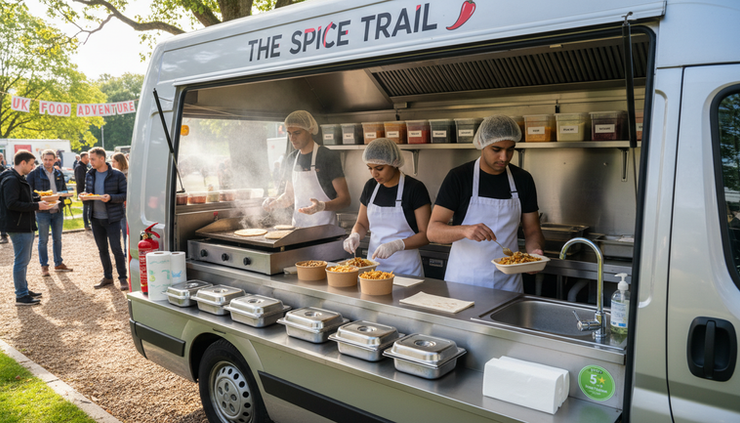
Food trails need more than good food
Food trails and street food events put mobile caterers in front of new customers. They also place businesses under added pressure. Service may be fast, storage may be tight, and the site may not offer the same facilities as a fixed kitchen.
A well-run van has a plan for all of this before the first order is taken.
Core risks usually include:
Food held at unsafe temperatures during transport or service
Cross-contamination between raw and ready-to-eat foods
Poor access to hot water for handwashing and cleaning
Dirty or empty clean water tanks
Waste water not managed correctly
Cleaning schedules missed during busy periods
Allergen information not available when customers ask
Paper records lost, damaged, or completed after the event
Good food safety does not slow a business down. Done properly, it makes service smoother because staff know what to check, when to check it, and what to do if something goes wrong.
Belmor can support food vendors by helping turn food safety procedures into daily working habits. The aim is not to create paperwork for its own sake. The aim is to make safe food easier to produce, even when the trading day is long and the pitch is busy.
Clean water and hot water are non-negotiable
Water is one of the most common weak points in mobile food operations. A van may look clean from the outside, but if the clean water system is poorly maintained, or if hot water is not available throughout service, the whole operation is at risk.
Street food vans normally need enough clean water for:
Handwashing
Cleaning food contact surfaces
Washing utensils where suitable facilities are provided
Supporting safe food preparation
General hygiene during service
The clean water tank should be suitable for food use, kept covered, protected from contamination, and cleaned on a regular schedule. Filling hoses should also be clean, stored safely, and used only for clean water. A hose left on the ground or shared for other tasks can undo good practice quickly.
Hot water matters just as much. Staff need running hot water for proper handwashing and cleaning. Hand sanitiser can support hygiene, but it does not replace handwashing where hands are visibly dirty or contaminated with food residues.
Belmor food safety experts can help assess whether a mobile unit has the right water set-up for the type of food being served. A van selling wrapped cakes has different risks from one handling raw meat, cooked rice, sauces, salads, and ready-to-eat toppings.
Belmor TNS software can also help make water checks part of the daily routine. For example, a mobile catering team can use digital checklists to confirm that:
The clean water tank has been filled before travel
Hot water is working before service starts
Soap and paper towels are available
Waste water storage is empty and ready
Water tanks and fittings have been cleaned as scheduled
Any fault has been reported and followed up
If staff cannot wash hands properly, the van is not ready to serve food.
That simple rule should sit near the top of every mobile catering opening check.

Temperature control protects the food and the business
Temperature control is one of the biggest food safety duties for food trails and vans. Food may be prepared in a base kitchen, transported to site, stored in a vehicle, cooked in the van, hot held, chilled, or reheated. Each stage needs control.
The most common temperature control points include:
Chilled storage before transport
Cold boxes, fridges, or refrigerated vehicles during travel
Cooking temperatures for high-risk foods
Hot holding during service
Cooling, if any food is cooled for later use
Reheating, where this is part of the process
End-of-day disposal decisions
A probe thermometer is essential for many mobile caterers. It must be clean, working, and used correctly. Staff should know where to probe food, how to avoid cross-contamination, and what action to take when food is outside safe limits.
The same applies to fridges and hot holding equipment. A unit that feels cold is not enough. A bain-marie that looks steamy is not enough. Checks need actual readings, recorded at the right time.
Belmor TNS software can help by keeping temperature checks clear and time-based. Instead of relying on memory or loose scraps of paper, staff can follow set checks during opening, service, and close-down. If a reading falls outside the expected range, the system can prompt corrective action notes, such as moving food to another unit, extending cooking, adjusting equipment, or disposing of food where needed.
Digital records also help managers see patterns. If one fridge often runs warm during transport, or one team regularly misses a mid-service check, the issue becomes visible. That makes it easier to fix the cause rather than repeat the same problem at every event.
Belmor food safety experts can support this by reviewing the menu and identifying the foods that need the closest control. Some items carry higher risk because of the way they are cooked, cooled, handled, or served. A good food safety system focuses attention where it matters most.
Cross-contamination control starts with layout
Space is tight in a street food van, so layout matters. Raw ingredients, cooked foods, packaging, utensils, cleaning chemicals, waste bins, allergen-free orders, and staff belongings can all compete for the same surfaces.
Good layout reduces risk before staff even begin cooking.
A practical van set-up should provide clear separation between:
Raw food handling
Dirty equipment
Cleaning chemicals
Waste storage
Allergen ingredients
Ready-to-eat food assembly
Clean utensils and packaging
Food and single-use items
Food preparation areas
Meals prepared for customers with stated allergies
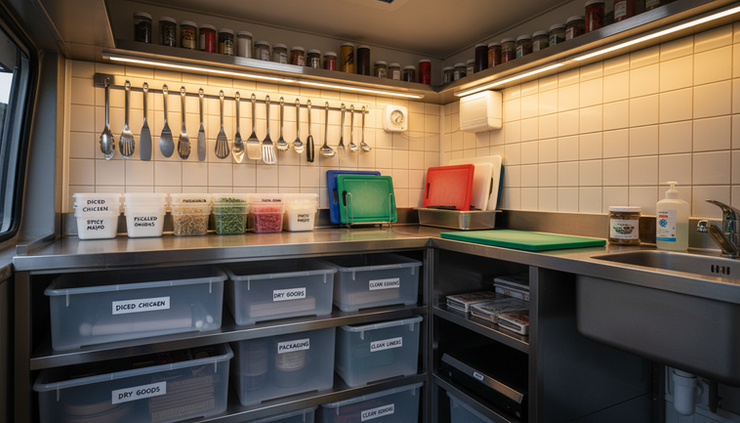
Colour-coded equipment can help, but it only works if staff understand the system and follow it under pressure. Separate chopping boards, utensils, containers, and storage areas must stay separate during a busy shift.
Belmor experts can visit or review a mobile catering set-up and help identify risks that may not be obvious from a written procedure. For example, a clean utensil tub placed under a hand towel dispenser might become contaminated by drips. A raw food container stored above salad ingredients could create a serious hazard. A waste bin too close to the preparation area may cause repeated hand contact and missed handwashing.
The best systems are practical. If a procedure asks staff to walk through a crowd to access a sink, it will fail. If a cleaning product is stored behind stacked stock, it may not be used when spills happen. Food safety advice needs to fit the actual van, pitch, staff numbers, and menu.
Cleaning schedules need to survive a busy service
Cleaning in a food van is not just an end-of-day task. Surfaces, utensils, handles, taps, switches, payment areas, bins, and service counters can all become contaminated during trading.
A useful cleaning schedule should state:
What needs cleaning
How often it needs cleaning
Which product to use
Whether rinsing is needed
Who is responsible
How the task is recorded
This is where many paper systems become weak. A laminated sheet may start clean and clear, then become greasy, wet, misplaced, or filled in at the end of the shift from memory. That does not prove the cleaning happened when it mattered.
Belmor TNS software can support live cleaning checks. Staff can complete the right task at the right time, and managers can see whether important checks were missed. This is especially useful across several vans or several food trail locations, where the owner or supervisor cannot stand beside every team throughout service.
Cleaning records also matter when something goes wrong. If a complaint, inspection, or internal review happens, clear records show what checks were completed and when. They also help identify gaps without relying on guesswork.
For food trails with changing sites, cleaning preparation should begin before arrival. A pre-event check might include:
Food-safe cleaning chemicals packed
Sanitiser available and in date where applicable
Disposable cloths or clean reusable cloths ready
Waste bags stocked
Gloves available where used correctly
Probe wipes or sanitising method ready
Cleaning schedule assigned to named staff
A clean van at 09:00 can become a risky van by 13:00 if no one owns the cleaning routine. Belmor can help turn cleaning from a vague instruction into a managed system.
Allergen safety must be clear and consistent
Allergen control is a major concern for street food businesses. At food trails, customers often browse multiple stalls and ask quick questions while queues form. Staff need accurate answers, not guesses.
A strong allergen system includes:
A full ingredient list for every menu item
Clear supplier information
Controls for recipe changes
Labelling for prepared items
Separation where needed
Staff training on how to respond to customer questions
The biggest risk is informal substitution. If a sauce, bun, spice mix, garnish, or cooking oil changes, allergen information may also change. A team member may think the menu is the same, while the ingredients are not.
Belmor TNS software can help keep allergen documents, checks, and sign-offs in one place. Belmor experts can also review menus and processes to help staff understand where cross-contact could happen. For example, shared fryers, shared tongs, mixed storage, and rushed assembly can all affect allergen safety.
Staff should never guess. If the answer is not known, they should check approved information or explain honestly that the business cannot confirm suitability. That may feel difficult during service, but it is far safer than giving false confidence.
Training turns systems into habits
Even the best software or written food safety system will fail if staff do not understand it. Training is the link between procedures and real behaviour.
Mobile catering staff need to know:
How to complete opening checks
How to check and record food temperatures
When to wash hands
How to clean and sanitise correctly
What to do if hot water fails
What to do if a fridge runs warm
How to prevent cross-contamination
How to handle allergen questions
When to stop service and ask for help
Belmor food safety experts can support training by making it specific to the business. Staff are more likely to follow a system when examples match the work they do every day. A burger van, coffee trailer, dessert stall, pizza truck, and multi-unit festival caterer all need different detail.
Belmor TNS software then helps reinforce that training. Daily prompts, checklists, and records remind staff what good looks like. Managers can review completion and follow up where checks are missed or corrective actions appear often.
This combination is powerful because it links people, process, and evidence. The experts help set the right standard. The software helps keep that standard visible during real trading.

Digital records make inspections and growth easier
Food businesses need to show that they understand their risks and control them. For a small van, this may start with simple daily records. For a growing street food brand, it may involve multiple units, different teams, and regular events across the country.
Paper records can work, but they become harder to manage as the operation grows. Forms get left in vans. Writing becomes unreadable. Managers may not see a failed check until days later.
Belmor TNS software gives mobile food businesses a clearer way to manage food safety records. It can support checks such as:
Daily opening and closing procedures
Hot water and clean water checks
Fridge and freezer temperatures
Cooking and hot holding records
Cleaning schedules
Delivery checks
Pest awareness checks
Allergen review tasks
Equipment fault reports
Corrective action records
For food trails and multi-site trading, this creates a central view of what is happening on the ground. It helps owners, supervisors, and food safety leads spot missing checks, repeat issues, and training needs.
Belmor food safety experts add the human judgement that software alone cannot provide. They can review whether the checks are suitable, whether the frequency is sensible, and whether staff know what to do with the results. That matters because recording a problem is only useful if the business responds properly.
What a safe food trail day can look like
A good food safety day starts before the van leaves base.
The team checks that the clean water tank is filled, hot water is working, refrigeration is at the right temperature, food is covered and labelled, allergen information is current, and cleaning supplies are packed. These checks are recorded in Belmor TNS software before travel.
On arrival, the team confirms the van is level and safe to operate, waste water storage is ready, handwashing facilities are stocked, and food temperatures are still under control. If something is wrong, staff record the issue and take action before service begins.
During service, the team completes cooking, hot holding, chilled storage, and cleaning checks at set times. If a reading is outside the safe range, the corrective action is logged. Staff can show what happened, what they did, and whether the issue was resolved.
At close-down, food is disposed of, cooled, or returned only where the procedure allows it. Surfaces and equipment are cleaned. Waste water is dealt with correctly. The clean water system and tanks are left ready for the next planned clean. Managers can review the day without chasing paper forms.
That is the real value of a joined-up system. It keeps food safety close to the work, where decisions are made.
The takeaway for street food operators
Food safety for mobile catering is not about having a folder somewhere in the van. It is about having working controls that hold up during a busy food trail, in poor weather, with limited space, while customers are waiting.
The essentials are clear: reliable hot water, a clean water tank, accurate temperature controls, strong cleaning routines, allergen clarity, trained staff, and records that prove the checks happened.
Belmor TNS software helps make those checks visible and consistent. Belmor food safety experts help make sure the system fits the food, the van, and the way the business actually trades. Put both together, and food safety becomes easier to manage every day, not just when an inspection is due.


Comments